
Passive House Skills Are Quietly Becoming a Career Differentiator in Boston Construction
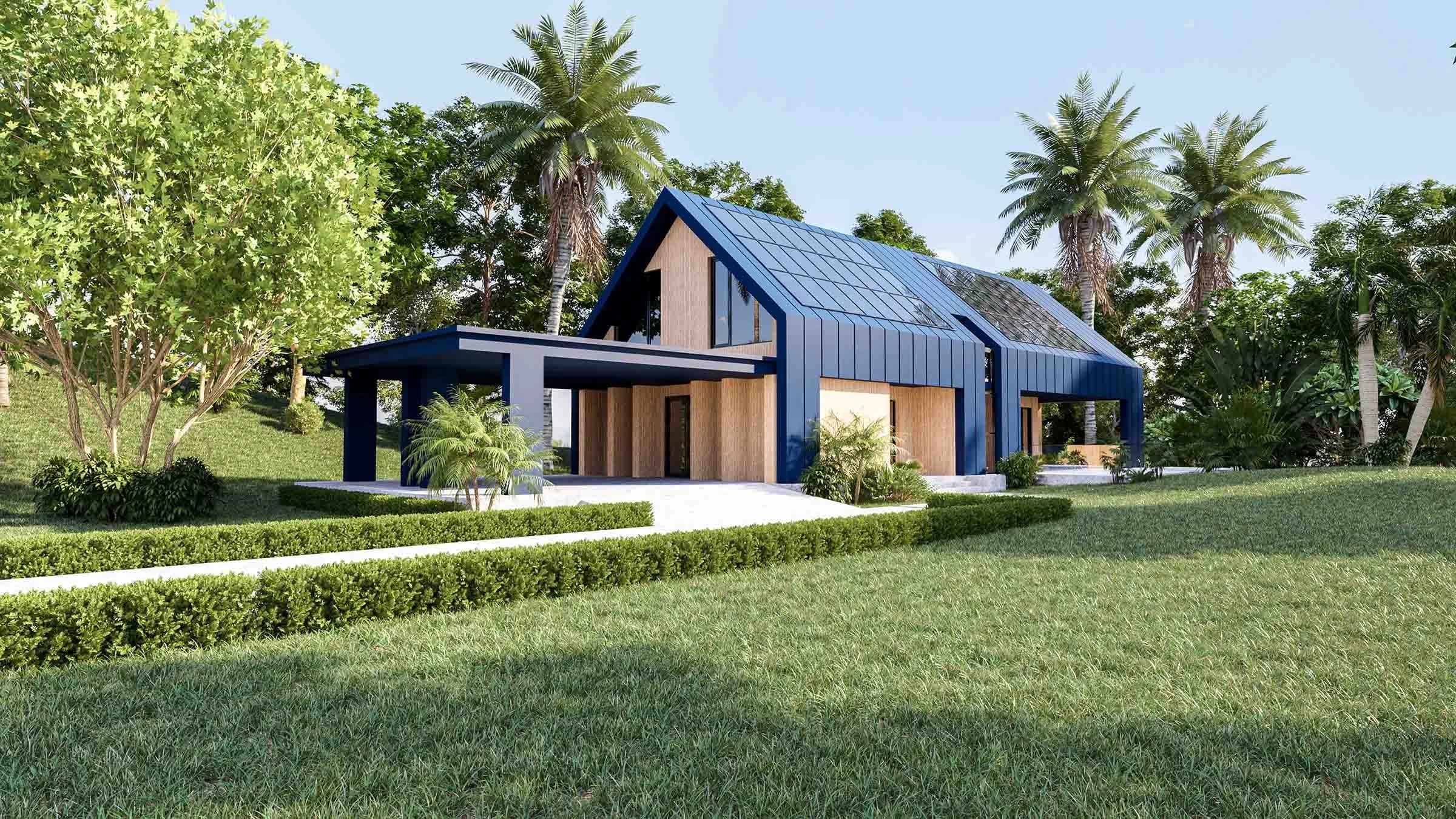
Boston is building differently. If you've been paying attention to what's coming out of the ground — and who's winning the work — you'll have noticed that Passive House is no longer a niche conversation. It's a procurement requirement, a client expectation, and increasingly, a line on a job description that separates the candidates who get the call from the ones who don't.
This piece is for the Project Managers and Estimators who want to stay ahead of that curve.
What's actually driving this
Massachusetts has some of the most ambitious building energy codes in the country. The stretch code — now adopted by a growing number of municipalities including Boston — pushes new construction toward near-Passive House standards even when full certification isn't required. Add to that the appetite among developers, housing authorities, and institutional clients for LEED and Phius-certified buildings, and you have a market where energy performance is embedded in the brief from day one.
This isn't a trend on the horizon. It's already in the ground.
Dellbrook|JKS — one of the largest and fastest-growing GCs in the Northeast — recently completed J.J. Carroll House in Brighton for 2Life Communities, a 180,000 sq ft pre-certified Passive House development. That's 142 affordable senior apartments built to a standard that demands airtightness, thermal bridge-free detailing, and mechanical ventilation systems that most GCs are still learning to sequence properly. They didn't stumble into that project. They built the expertise to win it.
And then there's Winthrop Center — the 691-foot, $1.3 billion mixed-use tower in downtown Boston, now the largest certified Passive House office building in the world. Boston is setting the benchmark, not following it.
What this means for your career
If you're a Project Manager or Estimator working in Boston's commercial or multifamily space, Passive House fluency is becoming the kind of skill that quietly compounds over time. You don't need to be a certifier. You don't need to have sat the PHIUS exam. But you do need to understand what it requires on site — and what it costs when you get it wrong.
Here's what that looks like in practice:
For Project Managers:
The sequencing complexity on a Passive House build is real. Airtightness testing happens at multiple stages, not just at handover. Penetrations — every pipe, conduit, and duct sleeve — need to be detailed and executed to a standard that most trades aren't used to being held to. If you've managed a Passive House project, you've learned to build quality into the process rather than inspect it at the end. That's a transferable skill that matters on every project you run after it.
For Estimators:
Passive House changes your cost model. The envelope costs more upfront — better windows, continuous insulation, airtight membranes — but the mechanical system shrinks significantly. Understanding that trade-off, and being able to communicate it to a client or design team in preconstruction, is where the real value sits. Estimators who can build a credible number on a Passive House project, and explain the delta against a code-minimum alternative, are a genuinely rare find in this market.
The skills gap is real — and it's an opportunity
Most of the construction workforce in Boston has never worked on a certified Passive House project. That's not a criticism — the volume simply hasn't been there until recently. But that's changing fast, and the candidates who have even one Passive House project on their CV are starting to carry it like a badge.
If you haven't had that exposure yet, the good news is that you don't have to wait for it to land in your lap. PHIUS offers training and certification pathways. The Passive House Institute has resources aimed at construction professionals, not just designers. And frankly, getting on a project — even in a supporting role — with a firm that's actively building to this standard is worth more than any course.
Firms like Dellbrook|JKS are doing exactly this kind of work, repeatedly, across Boston and beyond. They're not the only ones. The pipeline is growing.
The bottom line
Passive House isn't a specialism for a handful of architects anymore. It's moving into the mainstream of commercial and multifamily construction in Massachusetts, and the professionals who understand it — who can run the projects, build the numbers, and talk to clients about performance — are going to find themselves in an increasingly strong position.
If you're thinking about where to position your career over the next five years, this is one of the sharpest edges you can develop.
We place Project Management and Preconstruction professionals across Boston and the US East Coast. If you're exploring your next move — or want to understand where your skills sit in the current market — get in touch.
Get in touch →